
Travel Bag Insider exists because generic luggage reviews weren’t helping anyone. Specs copied from a product listing don’t tell you whether a wheel survives cobblestones, whether a “22-inch” carry-on actually clears an airline sizer, or whether a zipper holds up after fifty trips.
This page explains exactly how we evaluate the bags we cover, how we rate them, and — just as importantly — how we’re upfront when a review isn’t based on hands-on use.
Two Types of Coverage on This Site
We label every piece of content clearly so you always know what you’re reading:
🧳 Hands-On Tested — We purchased or received the product, used it on real trips or in controlled at-home testing, and are reporting our own direct observations.
📋 Research-Based Guide — We have not physically tested every product mentioned. These guides are built from manufacturer specifications, verified against official sources (airline websites, TSA.gov, brand spec sheets), and cross-checked against large samples of verified buyer reviews. We tell you this upfront rather than implying hands-on testing that didn’t happen.
Both types of content go through the same fact-checking process described below — the difference is only in whether we physically handled the product ourselves.
What We Actually Check on Every Hands-On Review
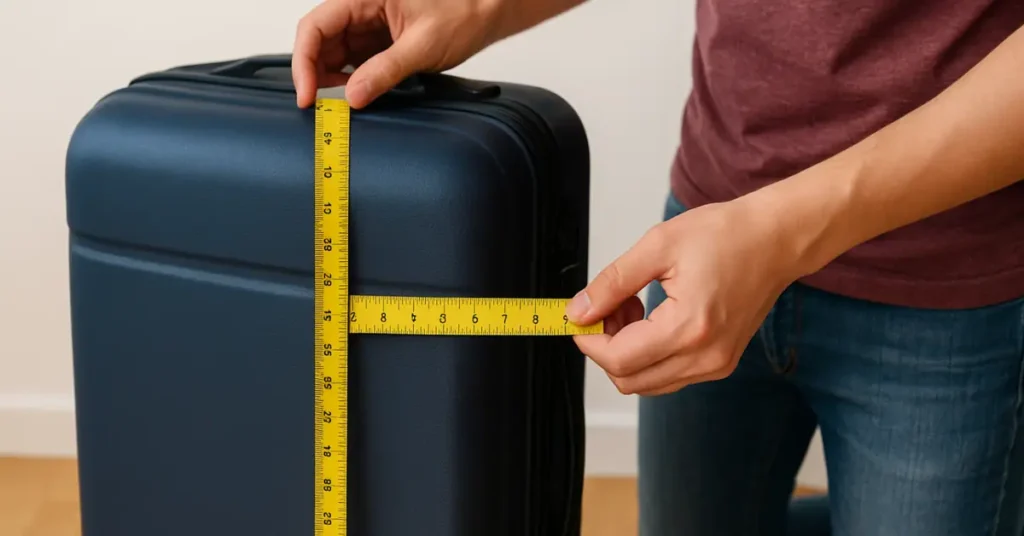
When a bag comes in for testing, we run it through the same core checks every time:
- Size verification — We measure the bag ourselves with the handle extended and wheels included, and compare it against the airline or TSA limit the review is written for. Manufacturer-stated dimensions are a starting point, not the final word.
- Weight — Empty and packed weight, measured on a luggage scale.
- Wheels and handles — How the bag rolls on carpet, tile, and rough pavement; whether the telescoping handle locks smoothly and doesn’t wobble under load.
- Build quality — Zippers, seams, stitching, and hardware, checked for weak points before and after use.
- Packing usability — How easily the bag packs and stays organized, and whether compression systems or dividers work as advertised.
- Comfort (for backpacks) — Fit, strap padding, and how the bag carries loaded over a real walking distance, not just a quick shoulder try-on.
We don’t score every bag against every criterion equally — a hard-shell carry-on and a packing cube don’t need the same checklist — but we tell you which criteria applied to the specific review you’re reading.
Example: How a Real Review Comes Together
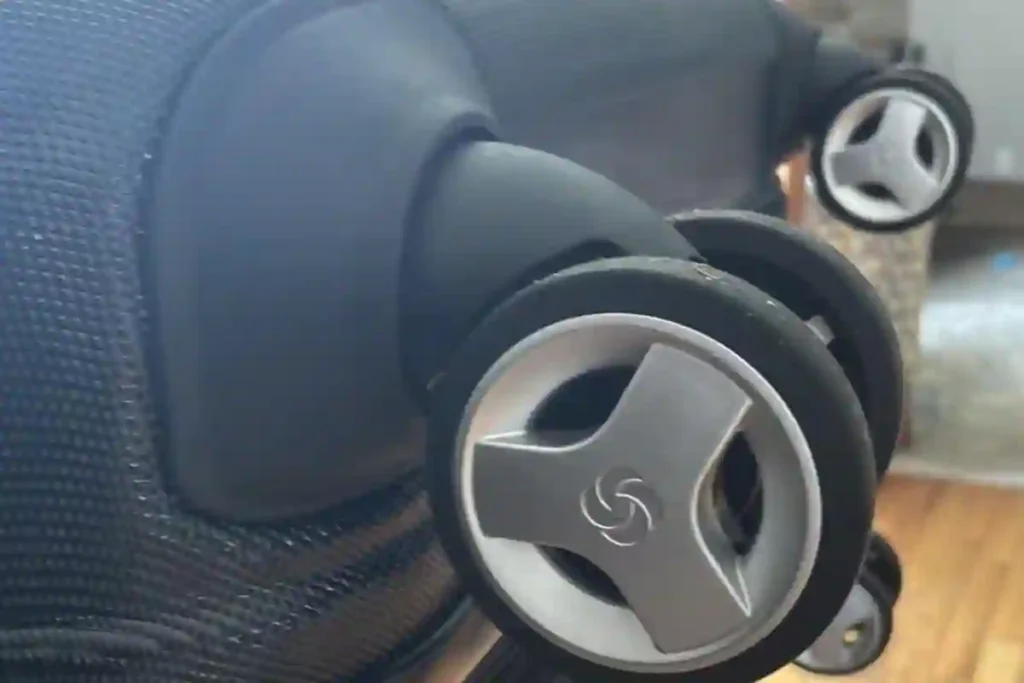
Here’s what “hands-on tested” actually looked like for our Samsonite Omni PC review:
- Week 1 — Unboxed and measured the 20-inch Teal against Delta and American Airlines sizers, empty and packed.
- Weeks 2–4 — Used it on a real JFK–LAX round trip on Delta, checking overhead bin fit and how the spinner wheels handled airport terrain.
- Weeks 3–6 — Took it on cobblestone streets in Prague and on the NYC subway to see how the wheels and handle held up outside of smooth airport flooring.
- Throughout — Logged zipper and wheel wear, and read close to 30,000 verified buyer reviews to see whether our unit’s behavior matched or diverged from the broader ownership experience.
- Write-up — Compared our notes against 4 competing carry-ons in the same price range before finalizing the rating.
Not every review gets six weeks — a $30 packing cube doesn’t need it — but every hands-on review follows the same “unbox → measure → use → compare” structure.
How We Rate
Every hands-on review ends with a score out of 10, based on the weighted checklist above:
| Score | Meaning |
|---|---|
| 9–10 | Exceptional. Few or no meaningful drawbacks for its category and price. |
| 7–8 | Strong pick. Minor drawbacks that don’t affect most buyers. |
| 5–6 | Usable, but with a real trade-off you should know about before buying. |
| 3–4 | Significant flaws. Only recommended for a narrow use case, if at all. |
| 1–2 | Failed our testing. We don’t recommend it. |
A bag doesn’t need a perfect score to be worth buying — we’re explicit in every review about who a product is right for, since the “best” carry-on for a frequent business flyer and for a family of four are rarely the same bag.
How We Handle Research-Based Content
For airline policy guides, TSA rule breakdowns, and size-comparison charts, hands-on testing isn’t the relevant skill — accuracy is. For this content, we:
- Pull rules directly from the airline’s or TSA’s official published policy, and link to the source
- Cross-reference claims across multiple official sources before publishing, rather than relying on a single secondary source
- Re-check pages on a regular cycle and note the last verification date at the top of the guide
- Avoid inserting personal opinions into factual, safety, or compliance information — this content should be usable by every reader regardless of their views
Example: Verifying a Policy Guide
When we publish or update an airline baggage guide, we don’t take the airline’s marketing page at face value. For our US Domestic Airlines Carry-On Rules guide, each airline’s entry is checked against that airline’s own current baggage policy page, and cross-referenced with TSA.gov for anything security-related (liquids, batteries, ID requirements).
When an airline changes its policy — like Delta’s April 2026 fee increase, or Spirit Airlines ceasing operations in May 2026 — we update the guide and note what changed and when, rather than silently editing the page.
How Often We Update
- Airline and TSA policy guides: reviewed at least every 60 days, or immediately when we’re notified of a policy change
- Product reviews: revisited if a product is discontinued, redesigned, or if we receive credible reports that contradict our original findings
- Everything else: reviewed annually at minimum
Corrections
We get things wrong sometimes — a policy changes, a spec sheet turns out to be inaccurate, or we simply make a mistake. When that happens, we don’t quietly edit the page and move on. We correct the error and add a visible update note, for example:
Update, July 2026: This guide previously listed an outdated fee. It has been corrected to reflect [Airline]’s current policy as of July 2026.
If you spot an error anywhere on the site, contact us and we’ll verify and correct it.
Who’s Behind the Reviews

Content on Travel Bag Insider is written and reviewed by Sunil Bhatt. Every published piece goes through a fact-check and editing pass — checking for accuracy, internal consistency, and outdated information — before it goes live or gets updated.
Frequently Asked Questions
Do you buy every product you review, or do brands send them to you?
Both happen. Some products we purchase ourselves; others are provided by the manufacturer for review. Either way, the review label tells you which is which, and receiving a free product never guarantees a positive review — see our Affiliate Disclosure for the full policy.
Can a brand pay for a better rating?
No. Our rating is based on the testing criteria on this page, not on advertising spend or affiliate commission rates. If a product doesn’t hold up, we say so, regardless of whether we have an affiliate relationship with the brand.
Why does one review say “research-based” instead of “tested”?
Usually because the product wasn’t available to us for hands-on testing, or because the guide covers a broad category (like “best carry-ons under $100”) where we’ve hands-on tested some but not all entries. We label the specific status in each case rather than defaulting to a blanket claim.
How do I report an error?
Use our Contact page. Include the URL and what you believe is incorrect — we check every submission and update the article if the correction is verified.
Affiliate Disclosure
Some links on this site are affiliate links, meaning we may earn a commission if you make a purchase — at no extra cost to you. This never influences which products we recommend or how we rate them. Full details are on our Affiliate Disclosure page.