Pull up any travel forum right now and you will find the same question repeated hundreds of times:
“I heard TSA changed the Liquid rules — do I still need the quart bag? Can I keep my shoes on? What’s the deal with the $45 fee?”
There is a lot of noise out there — and some of it is flat-out wrong. So let’s cut through it.
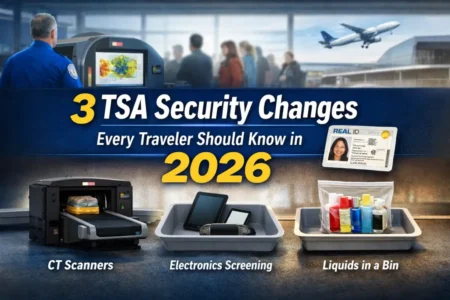
Here is what actually changed at U.S. airport security checkpoints in 2026, what is still the same, and what might be coming next — all verified against official TSA.gov announcements.
The Short Version — If You Are In a Hurry
| Rule | Status in May 2026 |
|---|---|
| 3-1-1 liquid rule (3.4 oz limit) | ✅ Still fully in effect |
| Remove quart bag at checkpoint | Depends on airport — CT lanes: no. Standard lanes: yes |
| Shoes off at security | ❌ No longer required (with exceptions) |
| REAL ID required | ✅ Yes — since May 7, 2025 |
| No REAL ID = $45 fee | ✅ Active since February 1, 2026 |
| Butane hair tools in checked bags | ❌ Now banned |
| Liquid rule eliminated | ❌ Has not happened — still 3.4 oz |
Now let’s go through each of these in detail.
The One Thing That Has NOT Changed — The Liquid Rule
Before anything else, let’s be direct: the 3-1-1 liquid rule is still in effect at every U.S. airport as of May 2026.
You still need:
- Every liquid in a container of 3.4 oz (100ml) or smaller
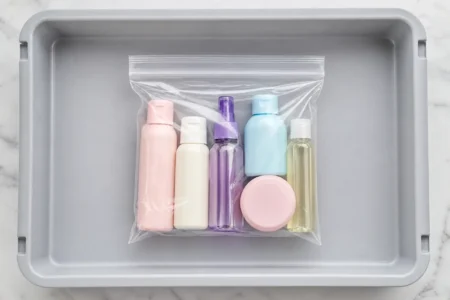
- All containers fitting in one clear quart-sized resealable bag
- One bag per person
Despite everything you may have read online, the federal government has not eliminated this rule. CT scanners change how your bag is screened at some airports — they do not change what is allowed inside it.
For a full breakdown of everything the liquid rule covers — including surprising items like peanut butter, mascara, and hummus — see our [complete TSA liquid rules guide].
Change 1: CT Scanners Have Quietly Transformed the Checkpoint
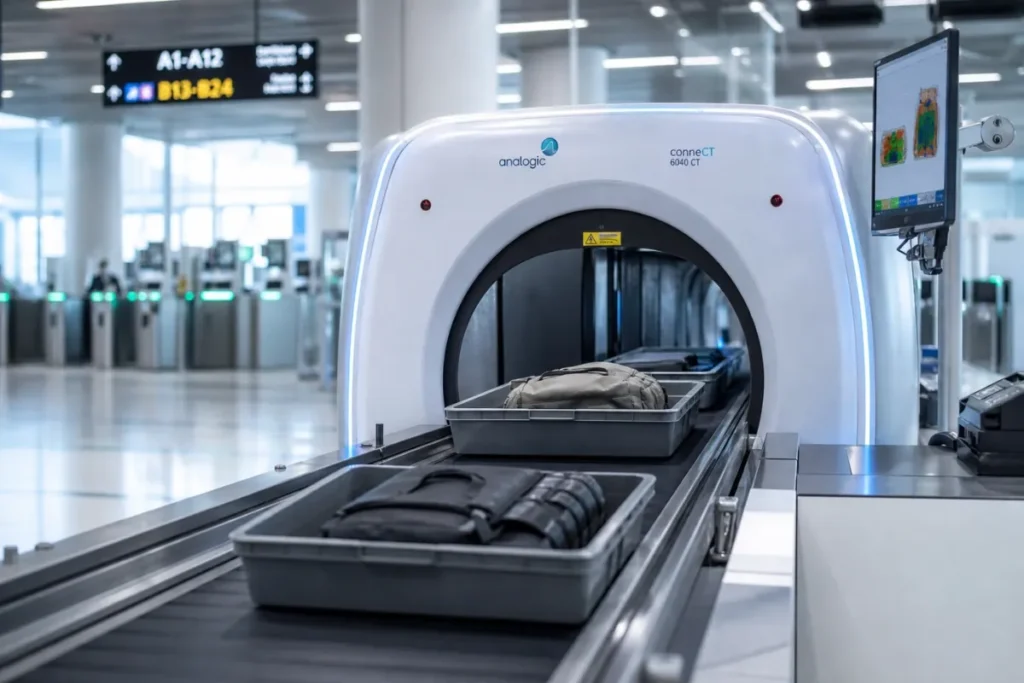
This is the biggest practical change most travelers do not fully understand — and it is already affecting your experience at the airport whether you realize it or not.
The TSA has been deploying 3D Computed Tomography scanners at U.S. checkpoints and has procured nearly 900 of these units, with plans to push total deployment beyond 1,000 across the system.
These machines work like hospital CT scanners — they create a 3D image of your bag that security officers can rotate and examine from any angle, rather than squinting at a flat 2D X-ray.
What this changes at the checkpoint:
At airports with CT-equipped lanes, you no longer need to pull your quart bag out of your carry-on and place it in a separate bin. Liquids stay inside your bag. Laptop stays inside your bag. You put the whole carry-on on the belt and walk through.
What this does not change:
The 3.4 oz size limit. Every liquid still needs to be 3.4 oz or smaller. The scanner changes how your bag is screened — it does not change what you are allowed to bring.
Important caveat:
CT lanes are at most major hubs — Atlanta, LAX, JFK, O’Hare, DFW, Miami — but not everywhere. Smaller regional airports may still use older equipment where the standard rules apply. Always check the signage at your specific checkpoint before you unpack.
And here is a real-world note: even at CT airports, liquids bags are sometimes still required to sit alone in their own bin depending on the specific lane and officer. Follow the posted instructions.
Change 2: Shoes Off Is Over — But Read the Fine Print
On July 8, 2025, Homeland Security Secretary Kristi Noem officially announced that TSA would no longer require travelers to remove their shoes during standard security screening — ending a policy that had been in place since 2006.
What this means in practice:
For most travelers at most airports, you keep your shoes on. The change applies to all domestic airports, and it has meaningfully sped up checkpoint lines where it has fully rolled out.
The fine print you need to know:
This change is not without controversy, and there are real-world exceptions that affect more people than TSA initially suggested.
In April 2026, Senator Tammy Duckworth sent a formal letter to TSA demanding the shoes-on policy be reversed after a classified DHS Inspector General audit found that TSA scanners were not capable of effectively screening all shoes — creating a potential security vulnerability. As of June 2026, the policy remains in place, but pressure to reverse it is ongoing.
On a practical level: certain footwear still commonly triggers alarms or requests for removal. Steel-toed boots, high heels with metal components, combat boots, and thick-soled sandals like Birkenstocks are known to set off scanners more frequently. TSA issued a warning specifically naming Birkenstocks in September 2025.
Bottom line: Keep your shoes on and walk through. Be prepared that certain footwear may still result in a request to remove them for secondary screening. The policy is shoes-on by default — not shoes-on guaranteed.
Change 3: REAL ID Is Now Enforced — With a Real Financial Penalty
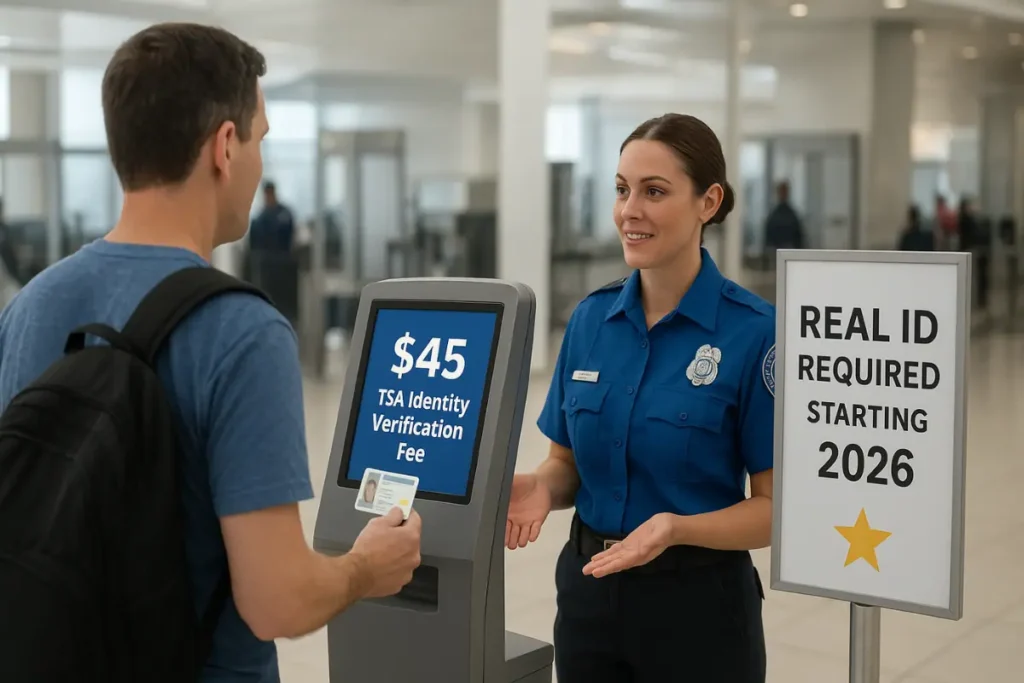
This one has been delayed so many times that many travelers stopped taking it seriously. That was a mistake.
REAL ID enforcement began on May 7, 2025. And starting February 1, 2026, TSA added financial teeth to the requirement with the launch of TSA ConfirmID.
Here is exactly how it works:
If you arrive at a TSA checkpoint without a REAL ID-compliant license or an acceptable alternative, you will be directed to use TSA ConfirmID — a fee-based alternative identity verification process.
- The fee is $45, non-refundable
- It covers a 10-day travel window from the date you enter
- It applies to travelers 18 years and older
- Identity verification through ConfirmID is not guaranteed — TSA warns that some travelers may still be denied access even after paying
- The process can take up to 30 minutes — enough to miss a flight if you are cutting it close
TSA strongly recommends paying the fee at TSA.gov/ConfirmID before arriving at the airport, not at the checkpoint. Early data shows that 95–99% of travelers are now arriving with compliant ID — but that still leaves millions of trips where this fee could apply.
How to check if your license is REAL ID compliant:
Look for a gold or black star in the upper corner of your driver’s license. No star means it is not compliant. Contact your state DMV to upgrade.
Acceptable alternatives to a REAL ID:
- Valid U.S. passport or passport card
- U.S. military ID
- DHS Trusted Traveler card (Global Entry, TSA PreCheck, NEXUS, SENTRI)
- Permanent resident card
- Enhanced driver’s license (available in select states)
Change 4: Butane Hair Tools Are Now Banned from Checked Luggage
This one flies under the radar but catches a surprising number of travelers — particularly those who use cordless styling tools.
TSA now prohibits the following from checked luggage:
- Cordless curling irons and straightening irons that use gas cartridges
- Butane-filled hair styling tools
- Spare gas cartridges for these devices
The reason is straightforward: butane gas cartridges are flammable and pose a fire and explosion risk in aircraft cargo holds, where temperature and pressure changes can trigger leaks or ignition.
What you can still do:
You may carry one butane-powered hair styling tool in your carry-on for personal use, provided it is secured in a safety case that prevents accidental activation. Spare butane cartridges are entirely prohibited — carry-on or checked.
Battery-powered and corded styling tools have no new restrictions. If you are unsure about your specific tool, check TSA.gov’s “What Can I Bring” tool before you pack.
Change 5: TSA Guest Passes — A New Option at Select Airports
This is a genuinely new program that most travelers do not know about yet.
TSA launched a pilot program allowing non-ticketed individuals to accompany travelers through security all the way to the gate. This is designed for situations like:
- Parents dropping off children flying alone
- Helping an elderly parent get to their gate
- Accompanying someone with a disability or medical need
- Saying a proper goodbye at the gate
The program is currently available at a limited number of airports including San Diego, Seattle, Orlando, Philadelphia, and San Francisco, with expansion expected. Guest passes are not automatically available — you need to request one at the airport in advance.
If this matters to your upcoming trip, contact your specific airport directly before counting on it.
What Might Be Next: The Liquid Rule Itself
This is what travelers most want to know. Here is the honest picture.
In July 2025 — the same day the shoe removal rule was ended — Birmingham and Edinburgh became the first U.K. airports to completely scrap the liquids limit, enabled by CT scanner technology. On that same day, Homeland Security Secretary Noem publicly hinted that the U.S. liquid rule could be next.
But here is the reality check from aviation security experts: TSA does not expect to complete full deployment of CT scanners at every U.S. airport until 2043 — largely due to funding limitations. Any change to the liquid rule before then would leave airports without CT technology operating with a meaningful security gap.
As aviation security professor Jeffrey Price told Travel Weekly: “It should wait because there’s still a lot of airports that don’t have that technology and I think that would represent too much of a gap in the system.”
What this means for you right now:
The 3-1-1 rule is not going away anytime soon at most airports. Pack your liquids to the current standard. If and when this changes, it will be announced officially at TSA.gov — not through a social media post or a travel blog headline.
Your Real-World Checkpoint Experience in May 2026
Here is what actually happens when you walk through security right now, depending on where you are flying from.
At a major hub with CT scanners (Atlanta, LAX, JFK, O’Hare, DFW, MIA, and most major airports):
Shoes stay on. Carry-on goes on the belt without unpacking anything. Walk through the imaging scanner. If everything is in order, you collect your bag and go. The line genuinely moves faster than it did two years ago.
At a smaller regional airport without CT scanners:
The process looks like 2022. Quart bag comes out of the carry-on and into a bin. Laptop out separately. Shoes may or may not need to come off depending on the specific checkpoint and what triggers the scanner. Follow posted instructions.
At either airport, every time:
Have your REAL ID or passport out before you reach the checkpoint. Leave butane styling tools in your carry-on, not your checked bag. Power banks and spare lithium batteries stay with you, not in the overhead bin. Know which type of airport you are flying from so you are not caught off guard.
Quick Action Checklist Before Your Next Flight
- Check your driver’s license for the gold/black star — REAL ID required
- No REAL ID? Pay $45 at TSA.gov/ConfirmID before you arrive
- Pack all liquids in 3.4 oz containers in one quart-sized bag
- Move butane styling tools from checked bag to carry-on
- Keep power banks and spare batteries on your person or under the seat
- Check your specific airport — CT lane or standard lane?
- Shoes on, but wear footwear without thick soles or heavy metal to be safe
Bottom Line
Airport security in 2026 is meaningfully faster at major airports than it was two years ago. CT scanners have changed the checkpoint experience. The shoe removal rule is gone — for now. These are genuine improvements.
But the rules that matter most — the 3-1-1 liquid limit, REAL ID requirements, and prohibited items — are being enforced more strictly than ever, not less. And the $45 ConfirmID fee is a real cost for travelers who show up unprepared.
Know what changed. Pack accordingly. And always check TSA.gov before a trip — it is the only source that matters when the rules shift.
Going deeper on liquid rules? Our [TSA Liquid Rules 2026: Complete Guide] covers the 3-1-1 rule, full liquid lists, food rules, makeup, medications, and a printable travel checklist.
Not sure if your item counts as a liquid? See What Counts as a Liquid at TSA — including items that surprise travelers every day.
Checking carry-on size limits by airline? See our US Domestic Airlines Carry-On Rules guide.
About the Author
Sunil Bhatt is a travel writer specializing in TSA rules, carry-on gear, and airport packing tips — helping travelers pack smarter for the last 6 years. Every article on Travel Bag Insider is cross-referenced against official TSA.gov guidance and primary sources before publishing.
Have a question about something in this article? Drop it in the comments — Sunil reads and responds to every one.
You Might Also Find Helpful –
- Budget Airlines Carry-On Rules (Spirit, Frontier, Ryanair) – 2026 Complete Guide
- US Domestic Airlines Carry-On Size Rules: Complete Guide
- Best TSA Approved Carry-On Bags for 2026
- How Strict Are Airlines About Carry-On Size?
Sources (all verified May 2026):
- TSA.gov — Official ConfirmID announcement (January 2026)
- TSA.gov — DHS Ends Shoes-Off Policy press release (July 8, 2025)
- TSA.gov — CT Scanner deployment data
- Defense Travel Management Office — REAL ID enforcement update
- Travel Weekly — CT scanner and liquid rule analysis
- Simple Flying — Shoes-on policy backlash coverage (April 2026)
- Axios — TSA ConfirmID fee breakdown (February 2026)