Buying the wrong suitcase can ruin a trip before it even starts. Between cracked shells, jammed wheels, and the brutal “airport test” of fitting into an overhead bin, it’s easy to get lost in specs that don’t matter.
After testing 50+ suitcases—from European cobblestones to flying with a toddler—I’ve seen what actually holds up and what breaks first. This guide shows you how to choose luggage that fits the way you really travel.
Hard-Side vs Soft-Side Suitcases: What Fits Your Travel Style?
One of the first choices in any luggage buying guide is simple: hard-shell or soft-sided. Both can be great, but for very different reasons.
Pros and cons of soft-shell luggage
A classic soft-sided suitcase (like many Samsonite or TravelPro suitcases) is usually made from nylon, polyester, or ballistic nylon.
Why do people like soft-sided luggage?
- Inexpensive: Entry-level luggage is usually made of fabric. For travelers on a budget, this is often the first piece of luggage they buy.
- Lightweight in budget ranges: Cheaper fabric bags are often lighter than cheap plastic ones, which helps with weight limits and luggage allowance.
- Flexible: The fabric has some give so that you can stuff in that last hoodie or extra clothing. The shell bulges a bit instead of refusing to close.
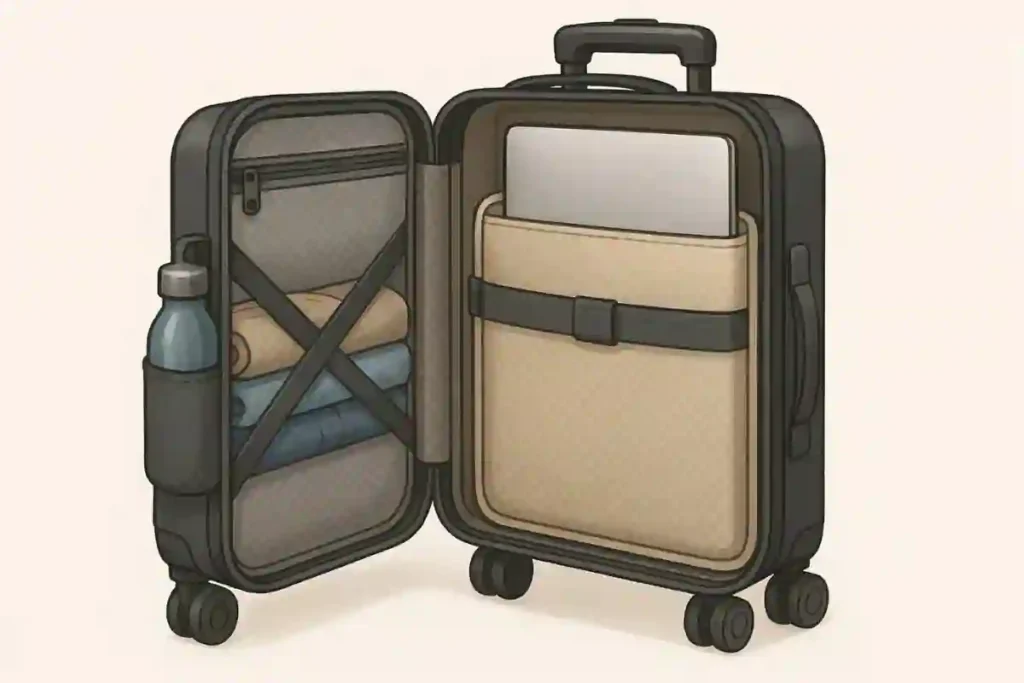
- Front pockets: Many soft-sided luggage pieces have an external pocket for a jacket, magazines, or a laptop.
Downsides of soft-sided luggage:
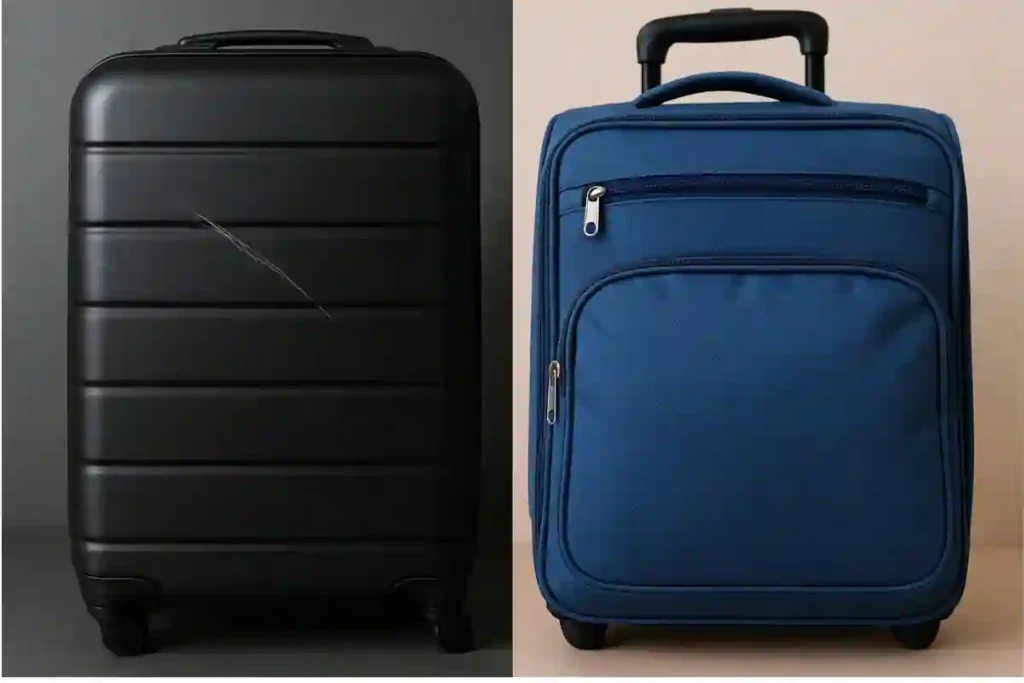
- Less durable: The fabric can tear or wear through from wear and tear, especially at corners and seams. Cheaper brands are notorious for that.
- Not great in rain: If your bag sits outside during airport check-in on a rainy day, water can soak through. The result can be a complete set of wet clothes and even damp laundry.
- Less structure: When an airline stacks bags in the hold, fabric bags can cave in a bit, which is rough on fragile items.
Soft bags are great if you want to save money, pack light, and do not carry many breakable things.
Pros and cons of hard-side luggage
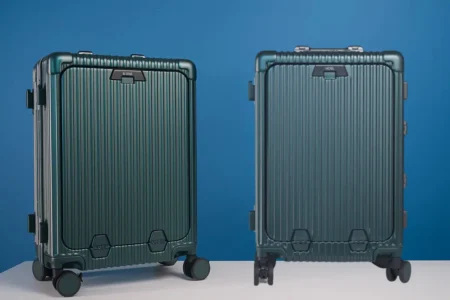
Modern hard shell suitcase often use polycarbonate, polycarbonate luggage blends, or acrylonitrile butadiene styrene (ABS) plastic—many premium luggage brands (like Wrangler, Amazon Basics) mix materials for better durability and weight.
Why travelers pick hard-shell luggage:
- More protection: The hard sided stays rigid, even at the bottom of a tall stack of baggage on the plane. That key advantage helps stop your teapot or camera from getting crushed.
- Better in bad weather: Rain has a harder time getting inside a plastic shell, especially when the seams and zipper lines are well designed.
- Cleaner look: Hard cases are easier to wipe down after rolling through dirty streets or dusty terminals.
- Stickers and markings: You can decorate them with stickers, paint pens, or a bright luggage tag so they stand out on the belt.
Downsides of hard-side luggage:
- Less flexible: If the case is complete, it is full. There is almost no give.
- Can be heavier in cheap versions: Cheap hard plastic can be heavier and less durable than mid-range fabric.
- Storage at home: An empty hard case still takes up full volume in your closet or on your luggage rack.
When to choose each type of luggage
Think about how you travel, not just what looks nice.
- Choose soft-sided when you want a cheaper bag, need outside compartments, and often travel with clothes only.
- Choose hard-sided or soft-sided polycarbonate luggage when you carry fragile items, expect bad weather, or check bags often with rough handlers.
- For air travel on low-cost carriers like Ryanair, where they check bag size and weight closely, hard-shell, durable luggage helps protect your gear when it gets thrown into hold luggage.
There is no single answer for what luggage is best, but knowing your priorities makes shopping for luggage much easier.
For a detailed comparison of how each material performs, check out our guide on Aluminum vs. Polycarbonate vs. ABS luggage.
Wheels and Mobility: Two Wheels, Four Wheels, or No Wheels?
How a suitcase rolls matters just as much as what fits inside it. Good wheels mean less strain and fewer regrets halfway through a long terminal.
Suitcases with two wheels
Traditional suitcases with two wheels roll behind you at an angle.
Pros
- Better on rough surfaces such as cobblestones, old sidewalks, or uneven streets.
- Wheels are usually more recessed, so they do not break as easily.
- Slightly more internal space, since there are only two wheels and fewer wheel wells.
Cons
- You have to pull them at an angle, which gets tiring for long walks.
- In narrow aisles on a plane, they often do not fit lengthwise, so you end up carrying them instead of rolling.
- They do not glide sideways in crowded areas, so weaving around people is harder.
Two-wheel bags still work well if you do a lot of street walking on rough ground and do not mind pulling.
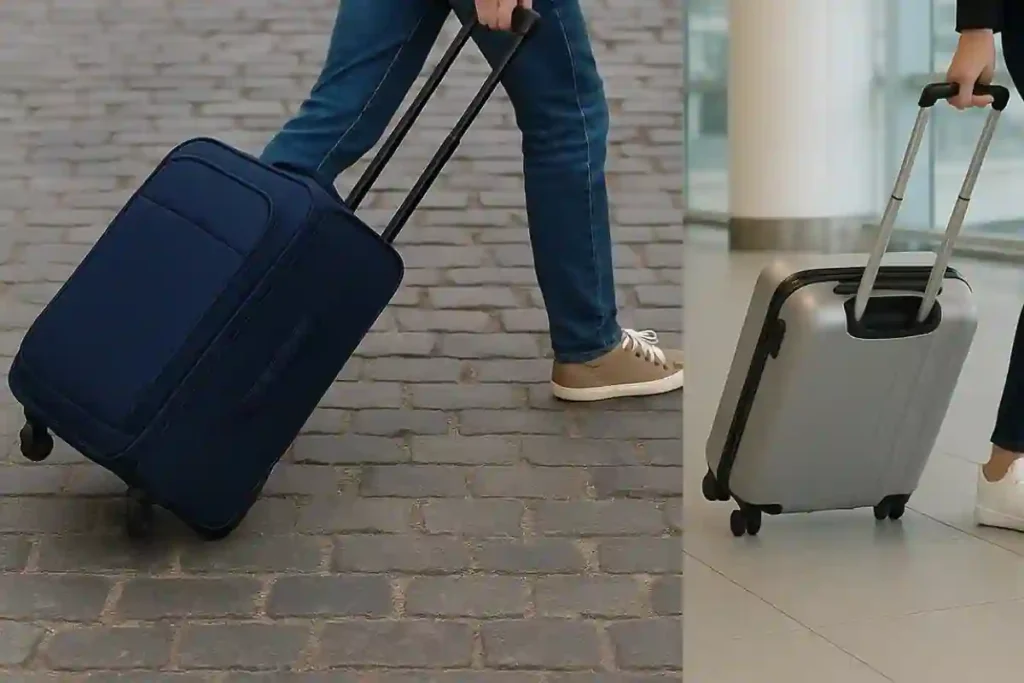
Four-wheel spinner suitcases
Most modern international travelers prefer four-wheel spinner bags.
Why spinners are so popular:
- They roll upright, so you can simply push them beside you. Your arm and shoulder will thank you.
- They fit down the airliner aisles lengthwise, which means you can roll them all the way to your seat.
- They are easier to maneuver in lines, elevators, and tight corners.
- You can rest another bag or tote on top and roll both together.
There is one small trade-off:
- Because there are four wheels, each in its own cutout, you may lose a bit of packing volume compared with a similar-sized two-wheeler.
Even with that, the recommendation is simple: go for four wheels unless you constantly deal with rough terrain.
For a deeper comparison of suitcase mobility, see our guide on 4-Wheel vs 2-Wheel Suitcases: Find the Best Fit.
No wheels: when a duffel bag wins
There are times when no wheels are best. Deep snow, soft sand, and long flights of stairs are not friends of any wheeled suitcase.
This is where a sturdy duffel shines:
- You carry it by hand or with a shoulder strap, so nothing drags.
- Many duffels have a rear loop-de-loop panel that slides over a telescoping handle, so they ride on top of a rolling travel bags when you are on smooth ground.
- A solid Samsonite duffel can be rugged enough to check as a checked bag.
A good duffel is one of the most essential backup travel accessories you can own.
Opening Styles: Lids, Clamshells, Zippers, and Latches
After you pick the shell and wheels, the next big choice is how the luggage opens and closes.
Top-opening vs clamshell lids
Top-opening suitcase
A classic top-opening suitcase has a lid that flips up from the top, like many soft-sided bags.
- Needs less floor space, since you can lean the lid against a wall.
- Gives you one deep main compartment, which makes it easy to toss things in quickly.
- Works well in tight hotel rooms where opening a full clamshell on the floor is impossible.
Clamshell suitcase
A clamshell suitcase opens into two halves, usually of equal size.
- Gives you two clear compartments for organization, often with dividers and panels.
- Keeps items a bit more separated, which is handy if you share a luggage set with a partner.
- Often used on hard-sided cases and premium designs.
The trade-off is space. To open the clamshell, you need as much floor space as the full footprint of the bag. In small rooms, people sometimes open them on the bed.
Tip: A clamshell works well if you like seeing everything at once and using organizers.
Zippers vs latches: which closing system is better?
Most bags close with a zipper, but some higher-end models use latches.
Here is a quick comparison.
Closing Style Pros and Cons
Zipper Common, easy to use, flexible opening. Slower to open all the way, the teeth can fail, and it is less water-resistant.
Latches Fast to open and close, feel more secure, and often have rubber seals for better water resistance. Usually, on heavier or more expensive bags, there are fewer flexible opening positions.
Latches are more common on premium brands where durability and security are a priority. For daily travel, a good quality zipper is still fine, but avoid the cheapest options with thin pulls and weak sliders.
Locks and Security: How Helpful Are TSA Locks?
A TSA lock is standard on many modern suitcases. It can be built into the latch system or be part of the zipper puller.
A few key points:
- A TSA or Transportation Security Administration agent can open any TSA lock using a special key, so they do not need to cut it.
- These locks are not foolproof security. They mainly protect you from casual tampering, for example, a hotel housekeeper sneaking a look inside your bag.
- They do not stop serious thieves, especially in busy airport areas.
Bold warning: Don’t rely on locks for high-value items. Keep passports, money, and electronics in your personal item, backpack, or handbag, close to you at all times.
Carry-On vs Checked: What Size Bag Do You Really Need?
Every trip starts with this question: carry-on or checked luggage?
Carry-on basics
Good carry-on luggage is one of the best travel investments you can make.
- Works for roughly 3 to 5-day trips if you pack smart.
- Gives you more control during airplane travel, especially when flights are delayed or changed.
- Lets you skip baggage claim and long waits.
But there is a catch. Even the best carry-on might be taken from you at the gate if the overhead bin space fills up. If you board last on a full economy class flight with a low-cost carrier or even a big airline like American Airlines, your bag might get checked.
That is why your carry-on still needs to be durable, with strong wheels and a solid handle, because it may be treated exactly like a checked bag.
Checked bags and weight limits
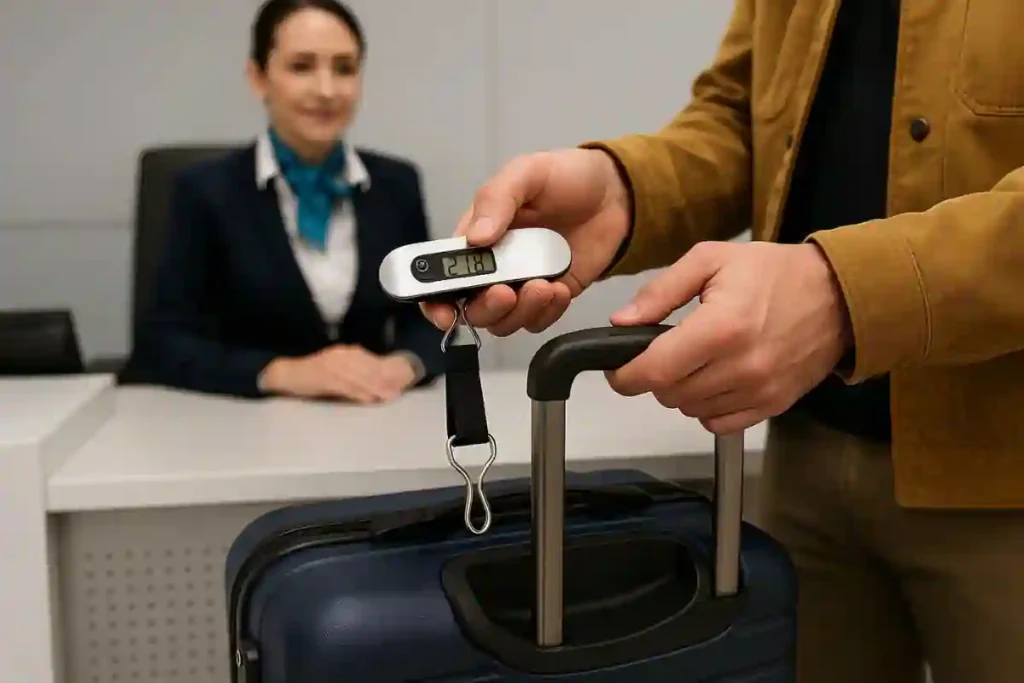
A larger checked luggage or the best checked bag is practical when:
- You travel longer than a week.
- You carry bulky winter clothes.
- You travel as a family, such as with a 3-year-old who needs extra gear.
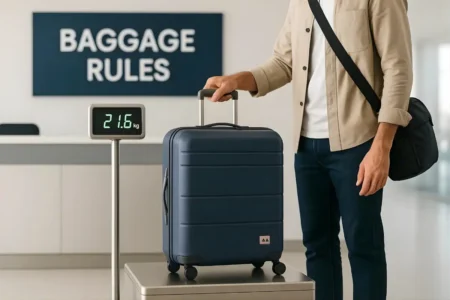
Airlines care a lot about the weight of checked baggage, especially on a low-cost carrier like Ryanair. Go over the limit, and you pay a fee that can hurt more than the ticket price.
A small digital scale is an essential tool here. Clip the strap around the handle, lift, and read the number. It is more accurate for buying luggage on the road than using a bathroom scale, and it saves surprises when you bring home souvenirs.
Use the scale:
- Before you leave home, balance your luggage pieces.
- Before you fly home, check how many gifts and travel accessories you have picked up.
Bold advice: Assume your carry-on could be checked, and pack breakables deep inside, wrapped, just like you would for a standard checked bag.
If you want to compare suitcase mobility, check our Hand Luggage Size Chart 2025: Major Airlines’ Cabin Bag Limits.
Trunk-Style Suitcases: Extra Stable and Great for Stackers
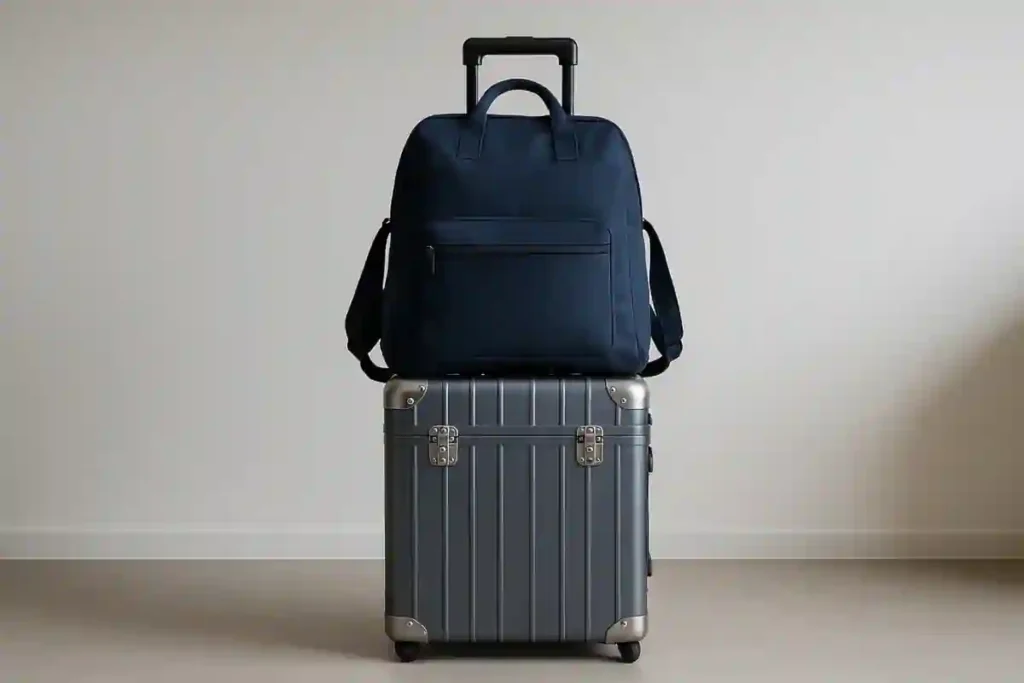
A trunk-style suitcase is taller and a bit fatter, with a squarer silhouette. It is not as wide, but it has more depth.
Why do some travelers love trunk designs?
- They stand more stable and are less likely to tip when you let go.
- They are perfect if you like to stack a duffel or everyday bag on top.
- They fit nicely in some car trunks thanks to their shape.
Handle types that help with stacking
The telescoping handle design matters when you build a rolling tower of luggage.
- A wide, two-rail handle gives a solid backrest for your tote, duffel, or smaller bag. Stacked bags wobble less and stay in place.
- A narrow single-pole handle, which some brands use to save weight, is less friendly for stacking. Bags tend to twist and fall off.
Some Level 8 cases, including their Grace Luggage series, use wide handles that go close to the full width of the bag. This makes it much easier to roll with a duffel or backpack sitting securely on top.
Duffel Bags: The Flexible Workhorses
A good duffel is the unsung hero of many trips.
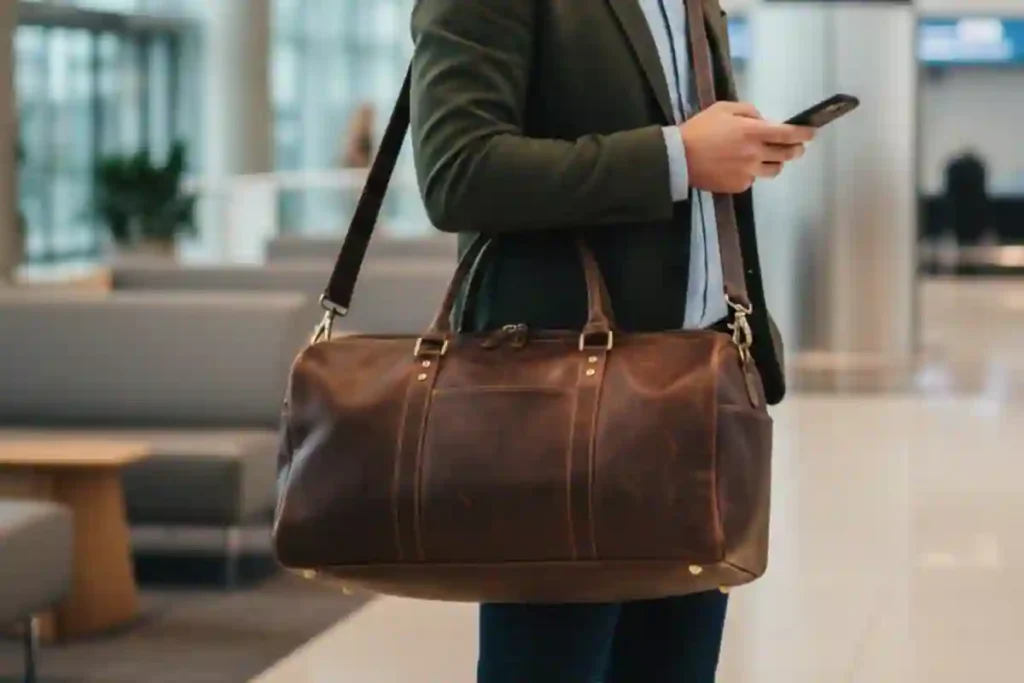
Why duffels deserve a spot in your luggage lineup
Here is what makes a duffel so valuable:
- No wheels to jam in snow, sand, or gravel.
- Easy to carry using handles or a shoulder strap.
- Often tough enough to be checked when made from heavy textile fabrics.
A rugged Samsonite duffel, for example, can handle being tossed with checked baggage. It will not rip open the first time a baggage handler grabs it.
Innovative ways to use duffels
Duffels can fill several roles in your luggage set:
- As a personal item under the seat, especially shorter ones.
- As a dedicated snack or food bag for road trips and national parks.
- As an overflow bag for souvenirs on the way home.
- It is a lightweight backup that folds flat in your main suitcase.
Many packable duffels use thin material like a rain jacket. They fold into a small pouch on the way out, then expand to full size on the way back. Put your dirty clothes in that bag and keep your fragile items in the more durable main case.
Big pro: A duffel gives you flexibility. If plans change, you can carry it, stack it, or check it.
For travelers and fitness enthusiasts who want to keep their gear fresh and odor-free, explore our Best Smell-Proof Duffel Bags for Travel & Gym for top recommendations.
Backpacks And Personal Items: What To Look For
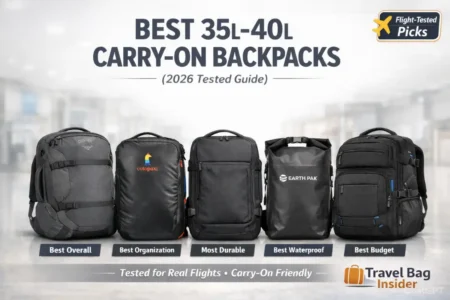
Your backpack or hand luggage is the one thing you almost always keep with you. Airlines may take your rollaboard, but they rarely touch your personal item.
Everyday laptop backpacks
A good laptop backpack should do more than hold a computer.
Key features to look for:
- Separate laptop pocket: Some designs, like the Level 8 laptop backpack, have a dedicated laptop section that opens flat. Security sometimes lets you leave the laptop inside during screening.
- Padding: A padded sleeve protects your laptop from bumps when you put the bag down under the seat.
- Strong top handle: You will grab this handle constantly when pulling the bag out of bins. A handle reinforced with metal or strong plastic feels safer.
- Water bottle pockets: Two pockets, one on each side, are incredibly essential if you like to carry drinks. Some designs let you zip them closed when not in use.
- Ventilated back panel: Raised mesh pads keep the bag slightly off your back so you sweat less when walking through a hot terminal.
These small details make daily use easier and extend the wear and tear life of the bag.
Camera backpacks for heavier gear
If you carry camera gear, a regular backpack may not be enough. A specialized camera bag like the Peak Design Everyday 30L is more rigid and built for expensive equipment.
Advantages:
- Side opening: Lets you swing the bag to your front, open a side panel, and get your camera without putting it on the ground.
- Customizable interior: Velcro dividers let you shape the inside around lenses, drones, or a gimbal.
- Extra protection: Padded walls and stronger shells protect gear better in busy airport crowds.
Camera bags are usually more expensive. You pay for better protection and smarter access. If you film often or shoot photos on every trip, they are worth considering when investing in luggage.
Extra Features That Actually Matter
Beyond the basics, a few essential features can make a big difference in how your luggage handles real trips.
Expandability
Some suitcases have a second zipper that runs around the outside. Open it, and the case expands by an inch or two.
Use it to:
- Add items on the return trip.
- Handle winter clothes that need more space.
Just remember that expansion usually uses fabric, so that a hard-shell bag will be less water-resistant in that mode.
Front pockets and dividers
Front compartments on complex cases are handy if you want quick access to a laptop but do not want a separate backpack or tote. They are less valuable if you already carry a good day bag.
Inside, look at the divider system:
- Simple straps only hold clothes down.
- Full panels with pockets help sort underwear, shirts, and gadgets.
Suiters and garment bags
If you travel with suits, dresses, or formal wear, a built-in garment bag or suiter section is gold.
A suiter:
- Holds a suit jacket or dress flat.
- Uses foam inserts to reduce creasing.
- Fits exactly inside the suitcase frame, so it does not slide around.
This is popular with business travelers and anyone heading to weddings or formal events.
Stable telescoping handles
Handle quality is a big sign of overall build.
A good handle:
- Feels like part of the bag, not a loose bolt-on.
- Extends smoothly without wobbling side to side.
- Locks firmly at one or two heights.
Strong handles on cases like the Level 8 Glitter carry-on or higher-end Suitcase brands give confidence. Flimsy handles on budget store bags are usually the first part to fail.
If your suitcase does experience wear and tear, like a broken telescoping handle, check our guide on how to fix a broken telescoping handle on a suitcase for easy repairs.
Price, Style, And Practical Tips
A proper luggage shopping guide would not be complete without talking about money, looks, and real-world trade-offs.
Price ranges and what you get
From experience:
- Under $100: Most bags at big-box stores fall here. Many look nice at first, but suffer broken wheels, handles, or zippers in just a few trips.
- Around $200: This is often the sweet spot for a solid carry-on. You get decent materials, smoother wheels, and better warranty support. Many people feel they have found the best balance here.
- $500 and up: Now you pay more for design, special trims like a leather bag handle, or a designer logo. A mid-range brand like Travelpro Platinum Elite Carry on may offer a Limited Lifetime Coverage at this level.
- $1000 and up: Premium names like TUMI – 19 Hard Shell Suitcase, sometimes with a full five-year warranty, but you are paying heavily for brand and style.
Aluminum cases look great and feel solid but are heavy. On airlines with strict size restrictions and tight luggage restrictions, a heavy shell eats into your weight allowance fast.
Color, markings, and identification
Most people buy black luggage, so black bags are the easiest to mix up.
Make your bags stand out:
- Choose unique colors when you can.
- Add stickers to hard cases.
- Use a paint pen to draw small shapes on a corner.
- Tie a bright ribbon to the handle.
- Add flags or patches that match your home country.
These tricks help you recognize your bag quickly on the luggage rack or belt and avoid someone else grabbing it.
Match luggage to your travel style.
Ask yourself:
- Do you mostly fly full-service airlines or budget carriers?
- Do you take trains and cars, where dimension limits are looser?
- Do you care more about style or pure function?
Your answers decide whether ultra-light bags, premium shells, or basic rugged workhorses make the most sense.
Conclusion: Build A Luggage System That Works for You
There is no single best suitcase brand or model for everyone. What matters is building a small luggage system setup that fits how you actually travel.
Use soft-sided bags for flexibility, hard-shell polycarbonate for protection, a solid backpack for your essentials, and a duffel for overflow. Keep security in mind but remember that locks are only part of the story. Pay attention to wheels, handles, and weight, since those shape your day-to-day travel experience far more than logos.
This luggage buying guide is here to help you feel confident the next time you are shopping for luggage. Pick the pieces that match your routes, your airlines, and your style, and your bags will quietly do their job while you focus on the trip itself.
FAQs- Luggage Buying Guide
What to look for when buying luggage?
Focus on Durability (Shell & Wheels), Weight (lighter is better for packing limits), Zippers (YKK is the industry standard), and Warranty (check if it covers airline damage).
How to choose luggage for international travel?
Prioritize Durability (hard shell-like polycarbonate is usually best), Security (TSA-approved locks), and ensure your primary bag is compliant with most airlines’ Carry-on Dimensions (typically around 22″ x 14″ x 9″).
How to choose luggage size?
Match the size to your trip length and style:
Carry-on (18″–22″ tall): 3–5 days of travel.
Medium (24″–27″ tall): 1 week to 10 days.
Large (28″+ tall): Multi-week trips or family packing (be mindful of airline weight limits).
What to avoid when buying luggage?
Avoid soft-sided fabric with low denier (it tears easily), exposed single spinner wheels (they break first), and bags without a TSA-approved lock for checked baggage.
What is the best size suitcase to buy?
The best size suitcase to buy is the 21-22 inch carry-on suitcase.
This size is the most versatile because it:
Maximizes airline compliance: It fits within the overhead bin limits of most major global airlines, saving you time and checked bag fees.
Encourages efficient packing: It is suitable for 3 to 5 days of travel.
Works as checked or carry-on: It can be used for short trips (carry-on) or packed into a larger bag for extended trips (checked).
If you must buy a larger bag for checked luggage, the 25- to 27-inch medium suitcase is the next best choice, as it’s ideal for a 1- to 2-week trip without being overly bulky or prone to exceeding weight limits.
You May Also Like: –