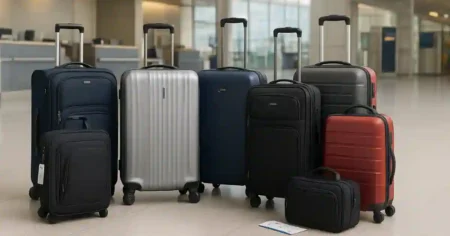
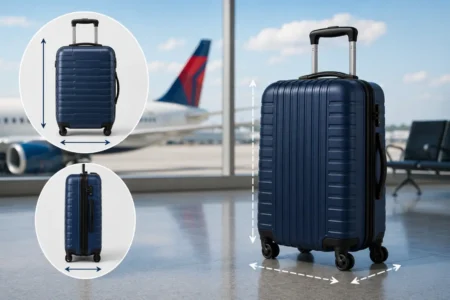
If you fly often, you know the specific type of anxiety that hits you in the boarding lane. You packed perfectly. You measured your bag.
But then, the announcement comes over the intercom: “Ladies and gentlemen, this is a full flight. We have run out of overhead bin space and will be checking bags for passengers in Groups 4 through 9.”
This is the dreaded gate check.
It slows you down upon arrival, risks damage to your luggage, and separates you from your essentials. But here is the secret airlines don’t tell you: Gate checking is almost always avoidable if you know how the system works.
At TravelBagInsider, we believe your bag belongs with you. This comprehensive guide will teach you exactly how to avoid gate-checking your carry-on, from choosing the right gear to knowing exactly what to say to the gate agent.
What Is a Gate Check and Why Does It Happen?
Before you can beat the system, you have to understand it. A “gate check” occurs when an airline agent takes your carry-on luggage at the boarding door or jet bridge and places it in the cargo hold with the checked luggage.
The “Bin Math” Problem
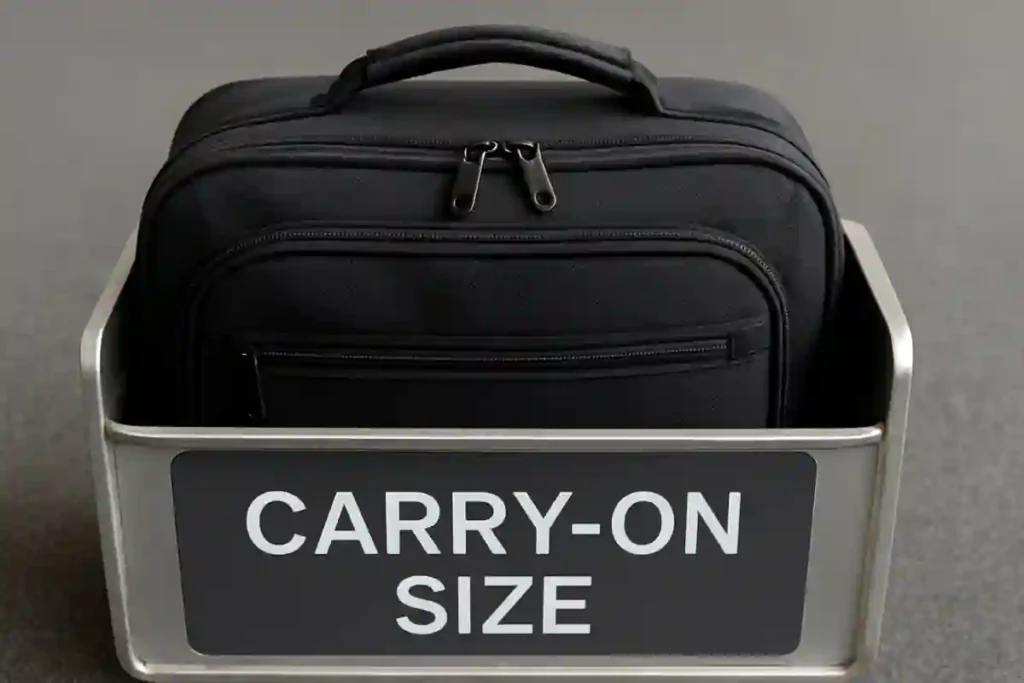
The main reason this happens is simple geometry.
- The Math: A Boeing 737 might have 170 seats, but only enough overhead bin space for about 100 roller bags.
- The Reality: If every passenger brings a standard 22-inch carry-on, the last 70 people to board have literally nowhere to put their bags.
However, agents sometimes gate-check bags preemptively to speed up departure, even when space is still available. This is where the strategies below will save you.
Phase 1: The Gear Strategy (Be Invisible)
The best way to avoid a gate check is to make sure the gate agents never look twice at your bag. Large, hard-shell spinners are “red flags” for agents scouting for bags to pull.
1. Hard Shell vs. Soft Shell: The Compression Factor
Hard-shell suitcases are popular, but they are the enemy of overhead storage.
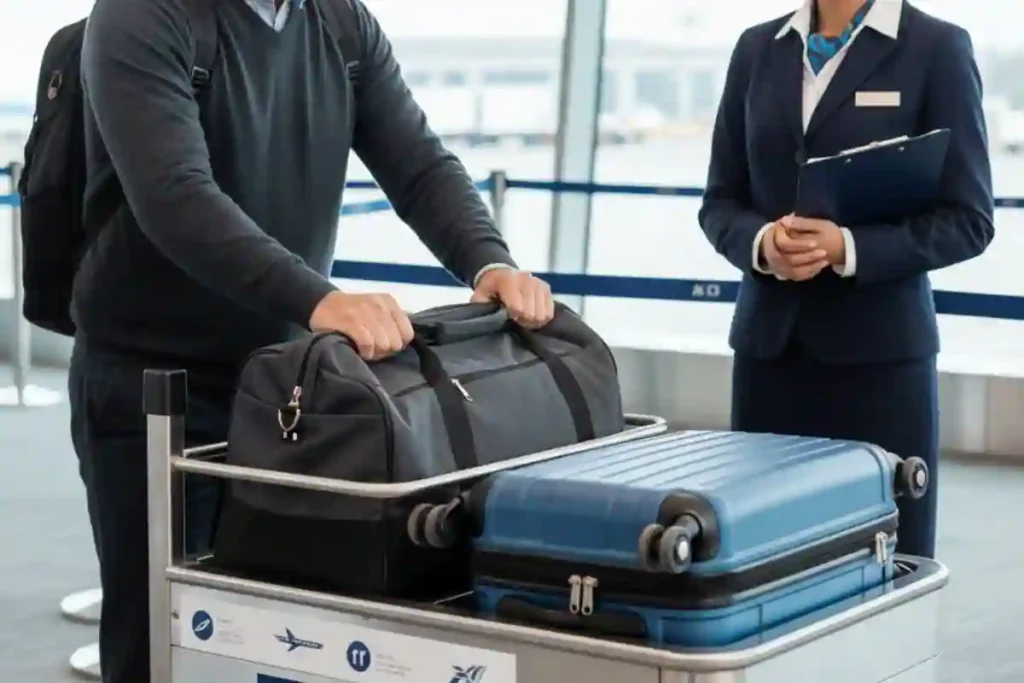
- The Issue: A hard-shell case has zero “give.” If the bin is tight, it simply won’t fit.
- The Solution: Switch to a soft-sided ballistic nylon carry-on or a travel backpack. A soft bag can be squished, compressed, and shoved into spaces that a hard shell would never fit. Agents know this, so they target soft bags less often.
If you’re deciding between a hard-shell or soft-sided suitcase, our Hard vs. Soft Suitcase Guide explains the key differences.
2. The Power of the “Personal Item.”
Most airlines allow one carry-on item (overhead) and one personal item (under the seat).
- The Hack: If you are traveling for a weekend, try to pack everything into a large backpack that qualifies as a personal item (approx. 18 x 14 x 8 inches).
- Why it works: Personal items are rarely gate-checked because they go under the seat in front of you.
- Pro Tip: Even if you have a roller bag, pack your “Life Essentials” (laptop, meds, chargers, headphones) in your personal item. If you do get forced to gate check your roller, you won’t be scrambling to unpack your valuables on the jet bridge.
We keep an updated list of the best performing personal-item bags:-👉 Best 18 × 14 × 8 Personal Item Bags
If you prefer backpacks with laptop protection, check out:-👉 Best 17-Inch Laptop Backpacks
Phase 2: Know Your Aircraft (Manage Expectations)
Not all planes are created equal. Knowing what you are flying on before you pack is crucial. You can find your aircraft type on your ticket or booking confirmation.
The Regional Jet (CRJ-200, CRJ-700, Embraer 145)
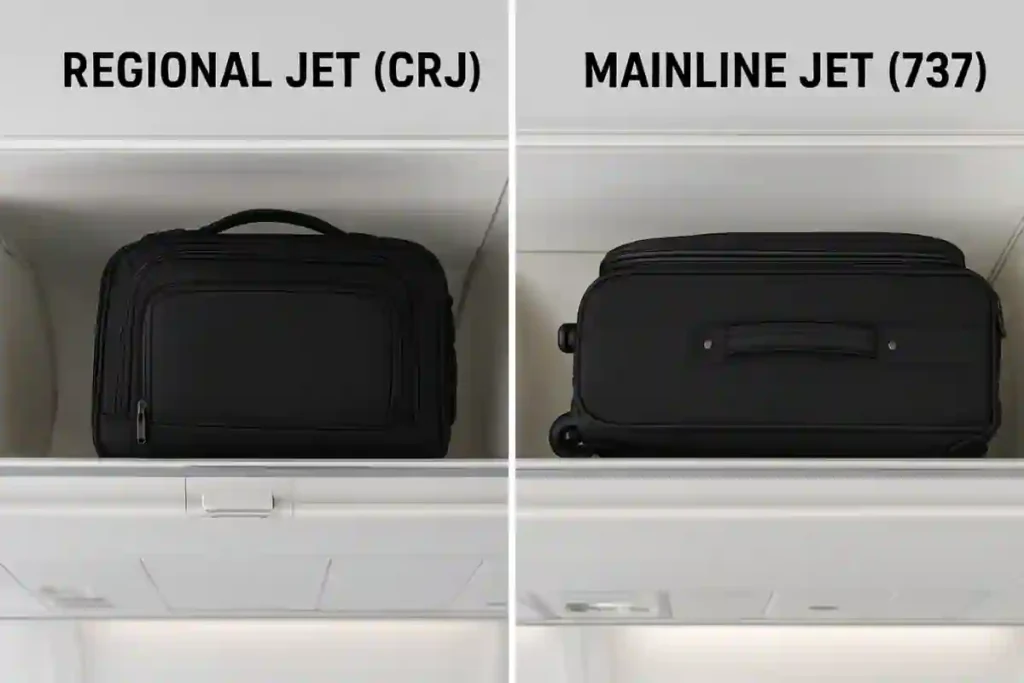
If you are flying a short hop on a small plane, the overhead bins are microscopic. A standard carry-on roller will not fit, no matter how much you argue.
- Strategy: Don’t fight it. These planes usually do a “Pink Tag” or “Valet Check” service, where you leave the bag at the plane door and pick it up immediately upon deplaning (not at the luggage carousel).
- Better Strategy: Use a duffel bag or backpack. These will often fit under the seat or in the tiny overhead bins of regional jets, whereas wheels will not.
The Mainline Jet (Boeing 737, Airbus A320)
These are standard domestic planes. The bins fit standard bags, but they fill up by Boarding Group 3 or 4.
- Strategy: Boarding priority is everything here (see Phase 3).
The Widebody (777, 787, A350)
These massive international planes have huge bins.
- Strategy: Relax. Unless you are the very last person on the plane, you will likely find a spot.
Phase 3: Win the Boarding Game
If the bins fill up by Group 4, the only way to guarantee space is to be in Group 1, 2, or 3. You don’t need to be rich to do this; you just need to be smart.
1. The Airline Credit Card Hack
Almost every major airline (Delta, United, American, Alaska) has a co-branded credit card.
- The Benefit: Most of these cards offer Priority Boarding (usually Group 2 or Main Cabin 1) just for holding the card.
- Cost vs. Value: The annual fee (often $95) is worth it if it saves you checking fees and guarantees overhead space on every flight.
2. Check-In Exactly 24 Hours Early
For airlines like Southwest that assign boarding positions based on check-in time, set an alarm on your phone for 24 hours and 01 minutes before your flight.
Clicking “Check In” the second the window opens can be the difference between boarding first and boarding last.
3. “Gate Lice” Strategy (Polite Version)
While we don’t encourage crowding, you need to be ready.
- The Move: Do not sit down until your group is called. Stand near lane 5 minutes before boarding starts. When your group is called, get in line immediately. The difference between the front of Group 4 and the back of Group 4 is about 30 suitcases—that’s half the plane’s bin space.
Phase 4: The Interaction (Scripts & Psychology)
You did everything right, but the agent still stops you. “I’m sorry, we are checking bags now.” Here is how to handle it gracefully and effectively.
Crucial Rule: Never get angry.
A rude passenger gets their bag checked (or gets kicked off). A polite passenger gets help.
The “Lithium Battery” Safety Card
This is the single most effective phrase in travel. International aviation rules prohibit loose lithium-ion batteries in the cargo hold due to fire risk.
| The Agent Says… | Your Response… | Why It Works |
| “The flight is full, I need to take your bag.” | “I completely understand. However, this bag contains lithium batteries and fragile medical equipment that I cannot separate. Is there any way I can try to find a spot?” | Mentions safety regulations (batteries) and health (medical). Agents are trained not to separate passengers from these items. |
| “We are checking all roller bags.” | “I see. I have a very tight connection and my bag is soft-sided. If I can’t find a spot, I promise to bring it back to the front immediately.” | Shows you are cooperative and reasonable. It lowers the agent’s stress. |
| “It’s mandatory.” | “Okay. I will need a moment to remove my laptop, portable charger, and medication as per safety regulations.” | Often, the agent doesn’t want to wait for you to unpack and will just wave you through to keep the line moving. |
Phase 5: The “Cheat” Codes (Use at Your Own Risk)
If you are desperate, here are a few “gray area” tactics expert travelers use:
- The “Coat” Trick: If an airline is weighing bags (standard in Europe/Asia), wear a travel vest or jacket with deep pockets. Stuff heavy items (battery packs, books) into your pockets. Once you are past the gate, put them back in the bag.
- Hold It on the Other Side: Carry your bag on the shoulder away from the podium agent. If they don’t see the bag, they can’t tag it.
- Remove Old Tags: Never leave old baggage claim tags on your handle. It confuses agents and makes the bag look “checked,” signaling to their brain that it belongs in the cargo hold.
FAQ: Common Questions About Gate Checking
Does gate checking cost money?
Usually, No. If the airline forces you to gate check because the flight is full, it is free. However, if they catch you with an oversized bag (too big for the sizer), they may charge you a gate-handling fee, which can be expensive ($50+).
Is my laptop safe in a gate-checked bag?
No. Baggage handlers toss bags onto conveyor belts and carts. Never, ever let a laptop, camera, or tablet go into the cargo hold. If you must check the bag, take the electronics out.
What is the difference between “Gate Check” and “Valet Check”?
Valet/Pink Tag: (Common on small planes) You leave it at the plane door and pick it up there when you land. This is much safer and faster.
Gate Check (White Tag): You pick up the bag at the baggage claim carousel at the final destination.
The Bottom Line
Avoiding a gate check isn’t just about luck; it’s about strategy. By switching to a soft-sided bag, utilizing your personal item for valuables, and using the “Lithium Battery” protocol, you can keep your luggage by your side where it belongs.
Want to make sure your bag fits every single time? Don’t miss our guide: Under-Seat Carry-On vs. Personal Item — Your Survival Handbook for Avoiding Airline Fees.
Before your next trip, you may also want to check:
- TSA & USA Travel Rules Changing in 2026
- 2026 Flight Rules & Money-Saving Tips
- Ultimate Luggage Buying Guide
These will help you fly smarter, faster, and without unwanted gate checks.